- Empty cart.
- Continue Shopping

Canada Post likes strikes! What is the real reason of the current Canada Post strike in September 2025?

Canada Post workers are on a nationwide strike as of September 26, 2025, in direct response to the federal government’s announcement of sweeping changes to the postal service, including the end of door-to-door mail delivery for nearly all Canadian households within the next decade. The Canadian Union of Postal Workers (CUPW) states the strike is fundamentally about defending the public postal service and preventing a corporate-driven plan that they believe will erode services, undermine workers, and pave the way for privatization.
- Government-Initiated Reforms: The strike was triggered by a directive from Public Works and Procurement Minister Joël Lightbound, who declared Canada Post was facing an “existential crisis” due to unsustainable financial losses, including a projected $1.5 billion loss for 2025 and over $5 billion in losses since 2018. The government instructed Canada Post to end daily door-to-door delivery, close some post offices, and implement a shift to community mailboxes, aiming to stabilize the corporation’s finances.
- Union’s Stance: CUPW argues that the government’s actions are a “direct attack” on postal workers and the public service, claiming the government has sided with Canada Post’s corporate plan instead of supporting stable jobs and universal service. The union asserts that the financial struggles are overstated and could be resolved by increasing stamp rates and reducing management salaries, not by cutting services and jobs. They also claim they were not consulted on the government’s announcement, which they view as a tactic to undermine negotiations.
- Financial Context: Canada Post reported a loss before tax of $407 million in the second quarter of 2025, its largest single-quarter loss, following a $46 million profit in the same period the previous year. The government cites the decline in letter mail volume and Canada Post’s small share of the parcel market as key reasons for the necessary changes.
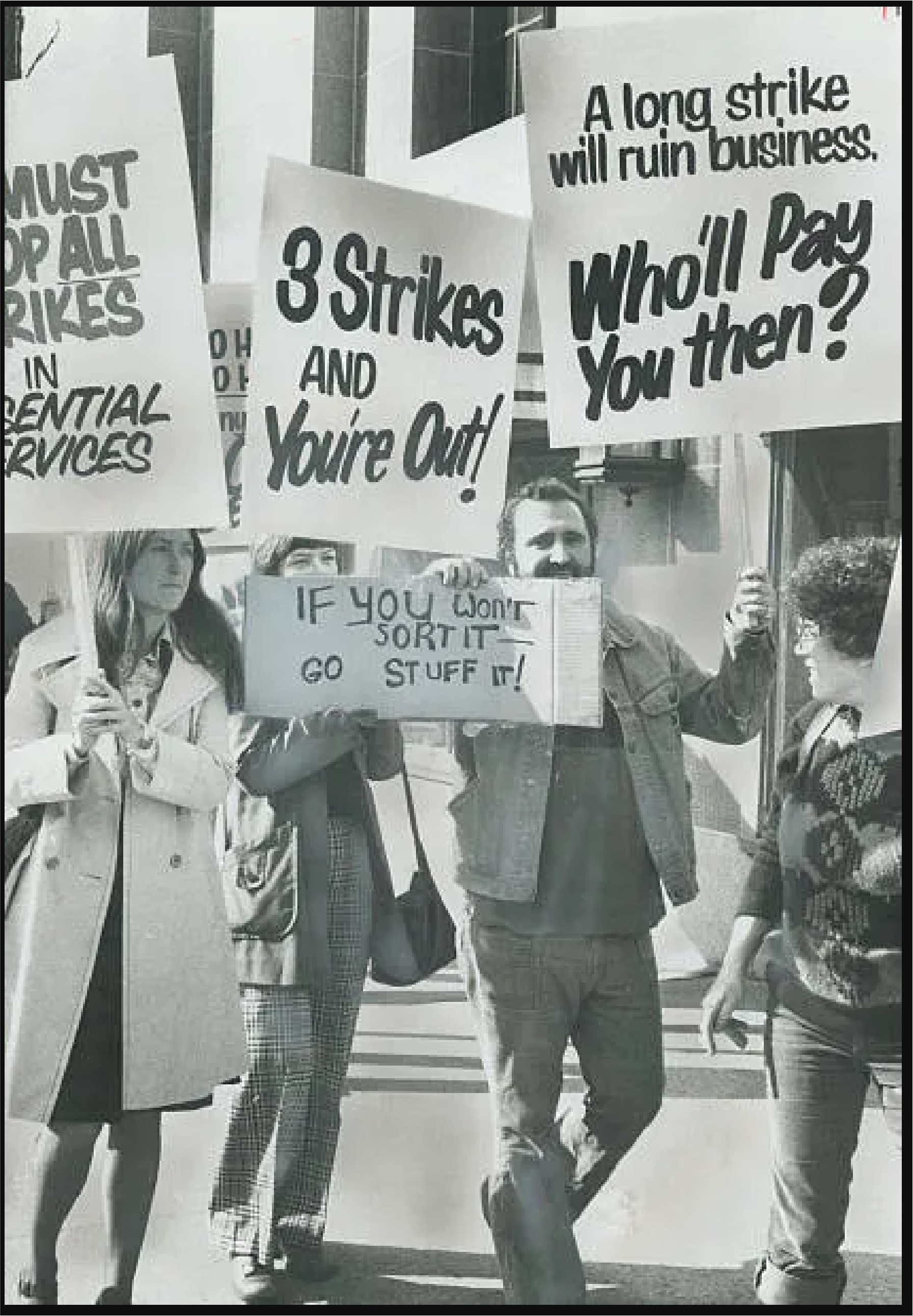
The unique story of a strike participant:
“I have unique perspective, LC for 15 years. Completed undergrad at u ft, army veteran, personal trainer experience, analyst with DND, etc.
The corporation is horribly run. Overwhelming majority of management: supervisors and up are incompetent and lack relevant experience… and the further up you go the further detached from on the ground reality it gets. I have more relevant qualification, credentials, experience than most directors and could even get the bs MBA if I really wanted as well as going for masters/PhD.
But the reality on the ground: while everyone will compare us to low wage amazon, our delivery “competition” is Purolator (which is owned by Canada Post), DHL, UPS, FedEx… and their wages are about 34-36$/hour top rate. Ours is 30$/hour. it is kind of offset in that we get double time when working beyond 12 hours per day and when working on our rotation day off (RDO). and while corporate will say that’s too much, reality is, unlike couriers, LC’s are in the elements longer. Whether walking door to door or standing at a CMB… it’s very different than having your truck loaded with parcels and being in and out with a parcel.”
MAY 2025: Canada Post is going to strike again… So $1-billion didn’t help? Is it a greediness or just a stupidity?

It looks like The Crown Corporation still has “significant financial challenges.”
Canada Post says that while the funding will help it “maintain its solvency and continue operating,” the loan will not solve its structural issues. It says it has incurred significant annual losses since 2018 “fuelled by rapid changes in the postal and parcel delivery sectors, high labour costs and legacy regulatory measures.”
Canada Post continue paying bonuses to their employees on all levels. How any business can claim to be “financially struggling” while giving out bonuses of any size to any of the employees is beyond me.
Public Services and Procurement Canada says the money will be provided on an as-needed basis to pay non-discretionary obligations, noting Canada Post would have fallen short of its necessary operating cash requirements in 2025 despite recently raising the price per stamp.
Canada Post calls it a “needed financial bridge” to ensure Canada Post can continue operating but it looks like “the dead end”, considering The Second Strike preparations.

$1-billion loan is a significant amount of money even for a big country like Canada. When I consider to take a loan, I also consider how I’m going to return the money. To take a loan is easier than to give the money back. Does Canada Post has a plan to improve the company condition and be able to pay back? Or is it “one way ticket to the blue”?
There are so many things Canada Post could do since their last “crisis” in December 2024, less than half of a year ago. Did they actually try? Who really needs 5 day/ week mail delivery? Cut it to one day per week, drop staff/ trucks significantly. Canada post is delivery of last resort, if people need next day prime, there are other logistics networks to fulfill.
Canada Union of Postal Workers has an interesting slogan: “Hands Off My Post Office” meaning that they won’t allow the corporation leaders to reduce the pay cheques and the bonuses to employees which could help to improve the company financial situation. Instead they require to keep the service pattern as is and pay more for their unnecessary service.

Not many people left who still use this Royal Post Service and this strike will significantly reduce the remaining mail users. Most of the items I had till recently in my mail box were Canada Post Spam – flyers, post cards, brochures, invitations etc. Recently I’ve placed a big NO FLYERS sticker on my mailbox and it and, maybe you won’t believed it, the number of this Canada Post Spam has significantly reduced. So I recommend using this simple but affective method to avoid junk mail in your mailbox. Try it yourself:
Public Services and Procurement Canada says the money will be provided on an as-needed basis to pay non-discretionary obligations GitHub-Advanced-Security Practice Questions, noting Canada Post would have fallen short of its necessary operating cash requirements in 2025 despite recently raising the price per stamp.